Best Stardew Valley Money Tips (How to Make Gold Fast)
Whether you’re trying to afford that deluxe barn with an automatic pig petter or just need enough gold for a backpack that doesn’t look like a sad potato sack, you’ve come to the right guide. Here’s how to turn Pelican Town into Fort Knox Valley with strategies that work all game phases.
Fish First, Ask Questions Later
If you can’t farm yet, you can fish your way rich. Early on, fishing is probably the single best way to make decent money while you’re still learning which button actually waters the crops. Mountain Lake and rivers on rainy days are dream spots for big-gold fish.
Fish early → learn fishing skill → sell fish for more gold.
There’s no crop to plant and replant — just a rod and a whole lot of splashy profit.
This is the perfect intro to cash flow before sprinklers or pigs steal all your attention.
Make fishing pay more without becoming a full-time seafood employee:
Best early spots: on clear days, the Mountain Lake is the reliable “paycheck pond.” On rainy days, hit rivers for Catfish (high value, high drama).
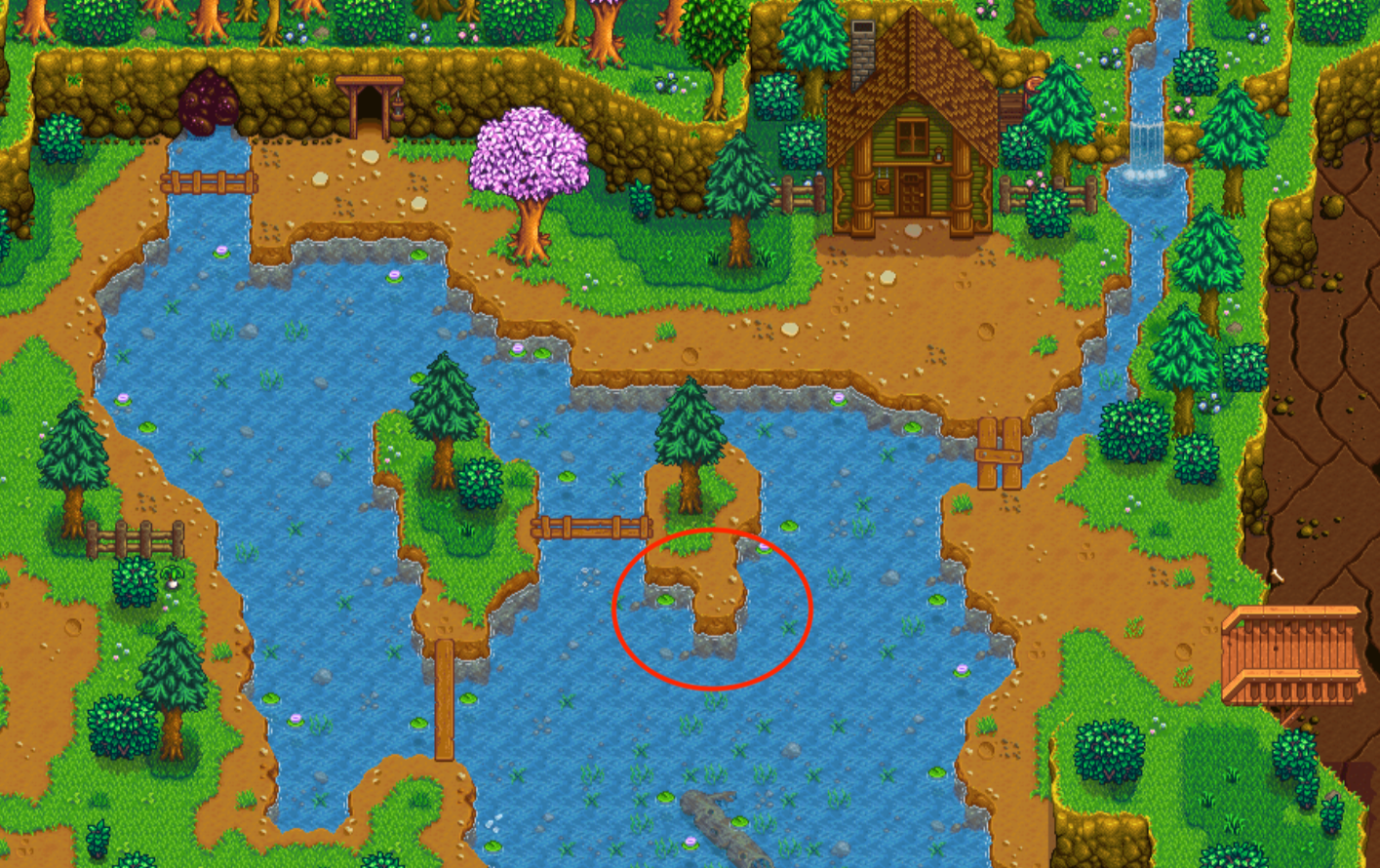
The #1 best spot to fish on the mountain lake.
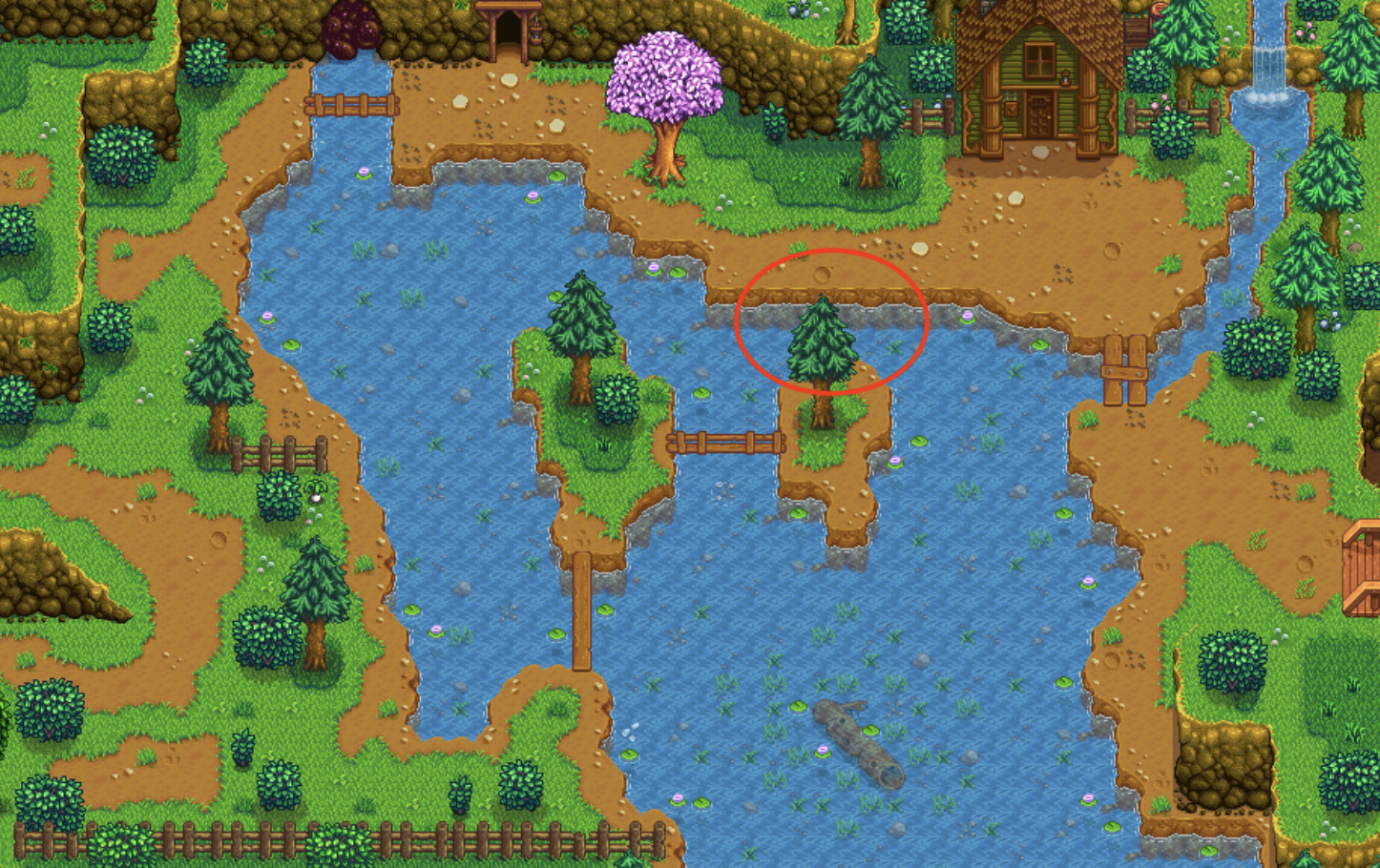
The 2nd best spot to fish on the mountain lake.
Upgrade path that actually matters: Get the Fiberglass Rod so you can use bait and stop wasting half your day catching algae’s cousin.
Chest hunting = bonus money:Treasure chests while fishing are basically loot boxes that don’t ask for your credit card.
Skill choices that boost profit: Professions change income, so if fishing is your early-game hustle, pick the profit ones and lean in. You can always change professions after unlocking the sewers.
For example: For extra profits for fishing, you’d want level 5 - fisher (fish are worth 25% more) and then level 10 - angler (fish are worth 50% more).
Stamina hack: Fish on rainy days when you don’t need to water crops. It’s like the game handing you an “oops, free money day.”
Plant the Right Crops…Seriously
Crops are Stardew Valley’s main money engine. But planting anything willy-nilly is like putting your gold on red in roulette and hoping for a miracle.
Here’s a quick crop cheat sheet:
Spring: Strawberries and potatoes.
Summer: Blueberries and Starfruit.
Fall: Cranberries
…all are proven top earners per season.
Seasonal crops are the backbone of a reliable income, kind of like that friend who always pays half the bill on time.
Your farm is a business. A cute business. But still a business.
Season timing matters: Crops die when the season changes (RIP to everyone who planted on the 27th like a dreamer).
Strawberries: Buy at the Egg Festival and plant immediately, they’re the spring “I suddenly have savings” crop.

Pierre’s reaction when you’re behind his stall at the egg festival.
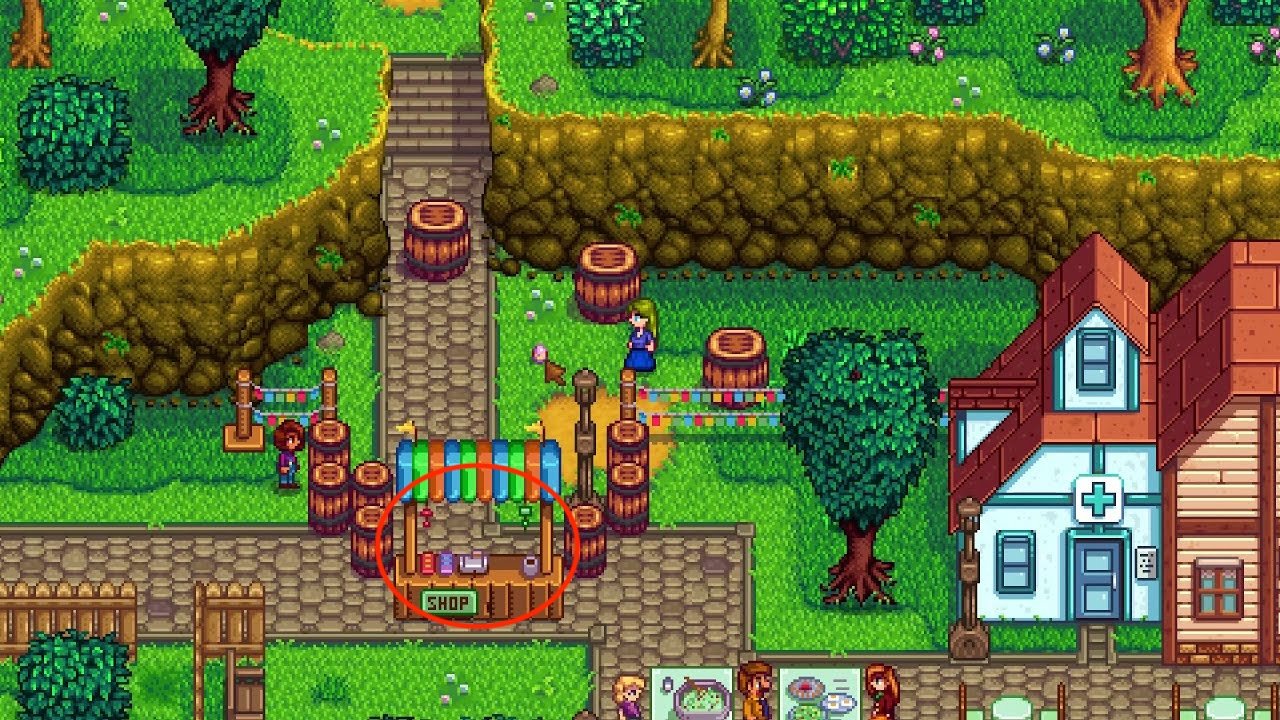
The egg festival shop location.
Multi-harvest crops = free repeats: Blueberries/cranberries keep producing after the first harvest, which is basically the crop equivalent of a subscription service that pays you.
Starfruit: Expensive seeds, huge payoff, but only if you can keep up with watering/processing.
Mini-optimization that adds up: Prioritize more crops over “perfect” crops early. Quality is nice, but volume pays rent.
Artisan Goods: Turn Tomatoes Into Treasure
If crops are cash, processing them into artisan goods is like turning cash into gold bars. Wine, cheese, honey, and more sell far better than their raw ingredients. Ancient fruit wine and starfruit wine in particular have breakneck profits.
Raw crop → Keg → Wine
Wine → Sell for more gold
This is late-game money-making on steroids, especially once you stack more kegs than ambition.
This is where Stardew goes from “farming sim” to “beverage conglomerate.”
Artisan profession is huge: Artisan Goods are worth 40% morewith the Artisan profession (with key exceptions like oil and coffee).
Keg priorities:
Use kegs for high-value fruit (ancient fruit/starfruit are the classic endgame route).
Preserves jars are great earlier because they’re easier to scale, but kegs usually win long-term.
Don’t sell raw if you can process: Selling raw crops is like selling flour instead of selling a cake. You’re leaving money on the table and the table is judging you.
Tap trees early: Oak resin is a bottleneck for kegs, so tap oaks sooner than later (future you will write you a thank-you note).
Pig Power: Truffles = Money
Pigs are the poster child of profit. They dig up truffles daily, and truffles sell well, especially when turned into truffle oil. It’s expensive to get pigs (you need deluxe barns), but long-term this is one of the most rewarding choices for barns.
Even regular barn animals (like cows and chickens) produce goods that sell well, milk and eggs aren’t flash-in-the-pan nonsense.
Pigs don’t make noise. They make income…and maybe a little noise, actually.
Truffle oil details: Truffle Oil is made in an Oil Maker and takes 6 hours.
Important money note:Oil doesn’t benefit from Artisan (yes, it’s rude). So treat truffles like a “sell vs process” decision depending on your setup and time.
Weather truth: pigs need outdoor time to find truffles: rain/winter slows the truffle train, so plan income streams accordingly.
Barn efficiency tip: if your farm day is chaos, consider keeping pigs as your “sunny-day bonus income” while artisan goods run 24/7 like a factory that never sleeps.
Bee Houses & Fairy Honey
Plant flowers next to bee houses for flavored honey — Fairy Rose honey in particular goes for serious gold. Bee houses are one of those delightful little secrets that seem small until you see your bank balance laugh itself into a plush recliner.
Bee Houses are quiet little money printers that mind their business.
Bee House range: a fully-grown, unharvested flower within 5 tiles makes flower honey.
Fairy Rose Honey is the king: it jumps honey value from 100g to 680g.
Pricing formula (useful for explaining value): honey price is base honey + (flower base price × 2).
Layout tip: Cluster bee houses around one flower patch like they’re forming a tiny honey cult. Don’t harvest the flower. Let it live its best life.
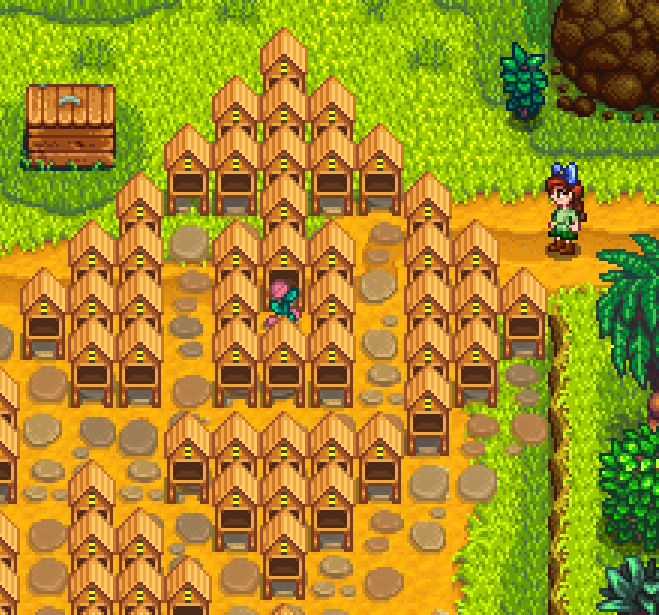
A reddit user’s method on earning fairy rose honey.
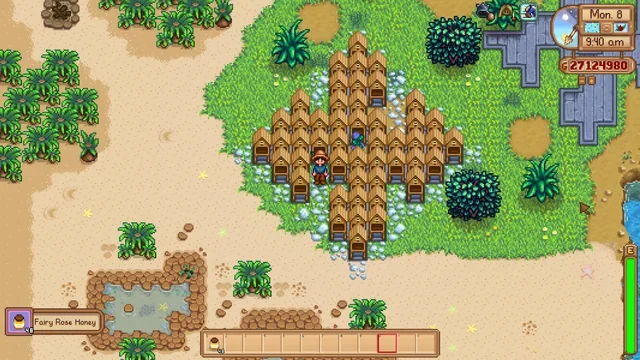
Another reddit user’s method on earning fairy rose honey.
Extra Cash Streams That Add Up
Help Wanted Quests: NPCs often pay above market prices for deliveries you’d do anyway.
Check Trash Cans & Dig Spots: Some treasures sell for hundreds of gold.
Foraging: Foraged items sell decently and require zero effort beyond walking outside.
Mining Iridium & Ore: Sell bars or use them to make killer tools and sell the surplus.
Each of these might not make you a million overnight, but they stack like puzzle pieces into a beautiful profit portrait.
These are the “I accidentally got rich” methods.
Quests aren’t just busywork: Quests give rewards and can stack into meaningful income while you’re already running around doing farm errands.
Prize Tickets: Completing quests/special orders can earn Prize Tickets (extra goodies = extra value).
Foraging: Sells decently early, costs nothing, and makes you feel like a woodland creature with a debit card.
Mining: Your goal isn’t “fight rock monsters for fun,” it’s “get ore so your tools and machines stop being held together by hope.”
Know Your Professions
As briefly touched on, Stardew Valley lets you pick professions as you level up skills. Choosing the money-boosting ones, like Artisan for processed goods, or Tiller for increased crop value can add huge chunks of gold to every sale. Pick wisely and every tomato, truffle, and tuna becomes just a little richer.
Professions are basically your farm’s tax code. Pick the ones that make the numbers smile.
Artisan is the money-maker: Farming professions matter, and Artisan’s 40% boost is why people build keg empires that blot out the sun.
You can fix regrets: You can change professions at the Statue of Uncertainty in the Sewers for 10,000g.
Final Wrap-Up
If you take nothing else from this guide, take this: don’t just grind, scale. Start with fishing for fast early cash, plant seasonal winners so your fields aren’t running a charity, then graduate into artisan goods where a humble fruit becomes an expensive personality trait. And when pigs enter the chat?
Congratulations, you’ve hired a team of adorable interns who dig up money while you do literally anything else.