Everything You Need to Know About The Sims 4 Life And Death Pack
If you are curious about what The Sims 4: Life & Death actually adds to the game, this guide breaks it all down in one place. I will walk you through every major feature included in the expansion, explain how the new systems work in real gameplay, and highlight what matters most for long-term saves.
You will find a clear, organized overview of Ravenwood, Soul’s Journey, Bucket Lists, wills and funerals, careers, ghost progression, traits, skills, and build and buy content.
Whether you are deciding if the pack is worth buying or want to understand how it changes legacy and storytelling gameplay, this post gives you everything you need to know before jumping in.
What Is The Sims 4 Life & Death?
The Sims 4 Life & Death is a full expansion pack that deepens how Sims experience purpose, loss, and the afterlife. It introduces interconnected systems that make everyday decisions matter long after a Sim is gone, transforming death from a simple game mechanic into a meaningful part of storytelling.
Life & Death is especially appealing to players who enjoy legacy gameplay, supernatural themes, and narrative-driven saves where choices echo across generations.
The New World: Ravenwood
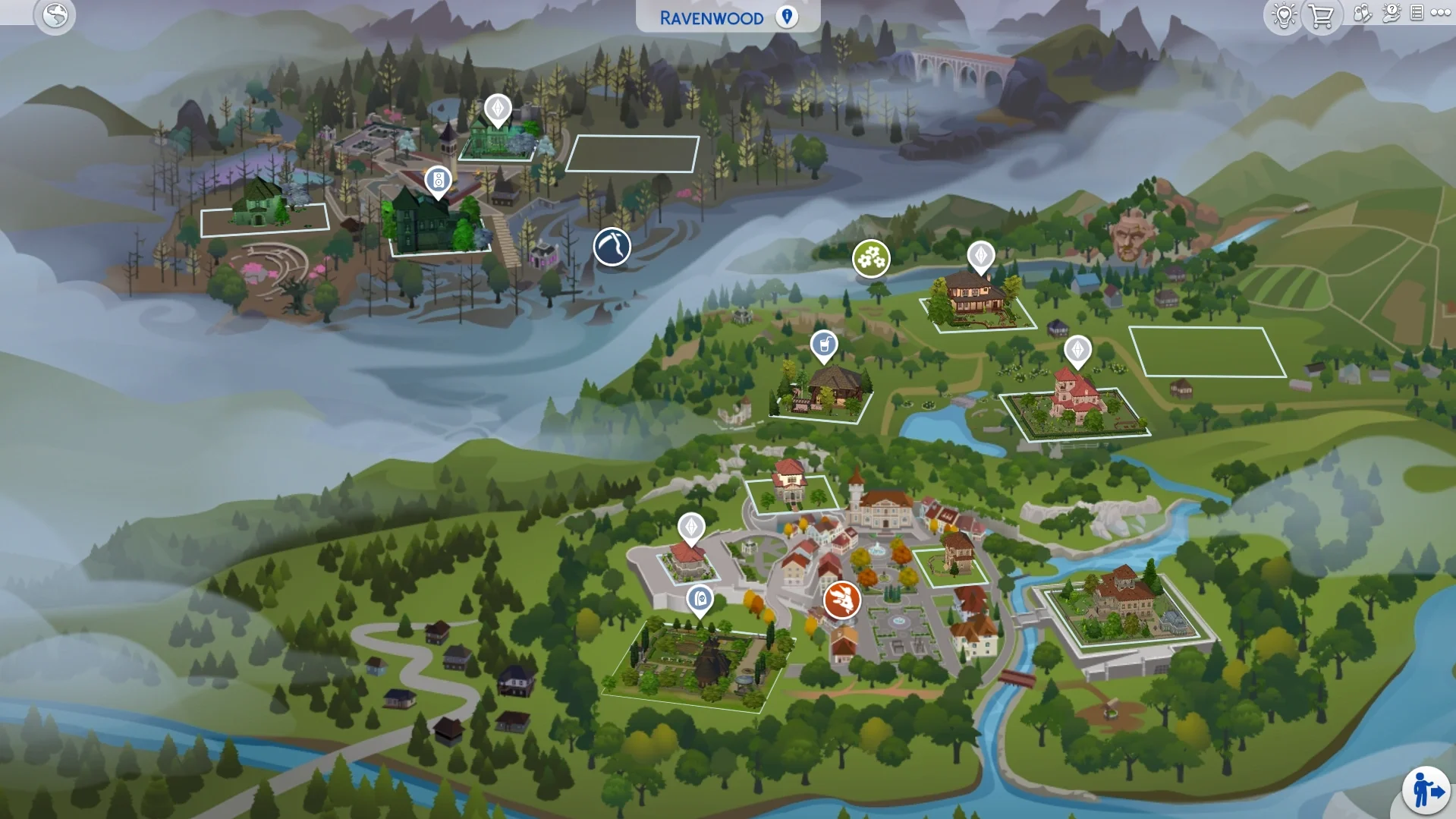
Gameplay screenshot of Ravenwood
Life & Death introduces Ravenwood, a moody world shaped by remembrance, mystery, and the thin line between life and death. The world is divided into Mourningvale, Crow’s Crossing, and Whispering Glen, each offering a different tone while remaining deeply connected to the pack’s themes.
Ravenwood is not just decorative. Many systems tied to ghost progression, rituals, and world events are anchored here, encouraging exploration and long-term play.
Core Gameplay System: Soul’s Journey
Soul’s Journey is the foundation of the Life & Death expansion. It connects how a Sim lives to what happens after death, turning the end of life into a continuation of gameplay rather than a stopping point.
Soul’s Journey tracks how fulfilled a Sim’s life was and determines what opportunities are available to them after death. Every meaningful choice a Sim makes contributes to this system, creating a sense that their life story truly matters.
Soul’s Journey progresses through multiple stages, starting while a Sim is alive and continuing after they pass away. The more intentionally a Sim lives, the more options and rewards become available in the afterlife. This makes everyday gameplay, careers, relationships, and personal goals feel more connected to long-term storytelling.
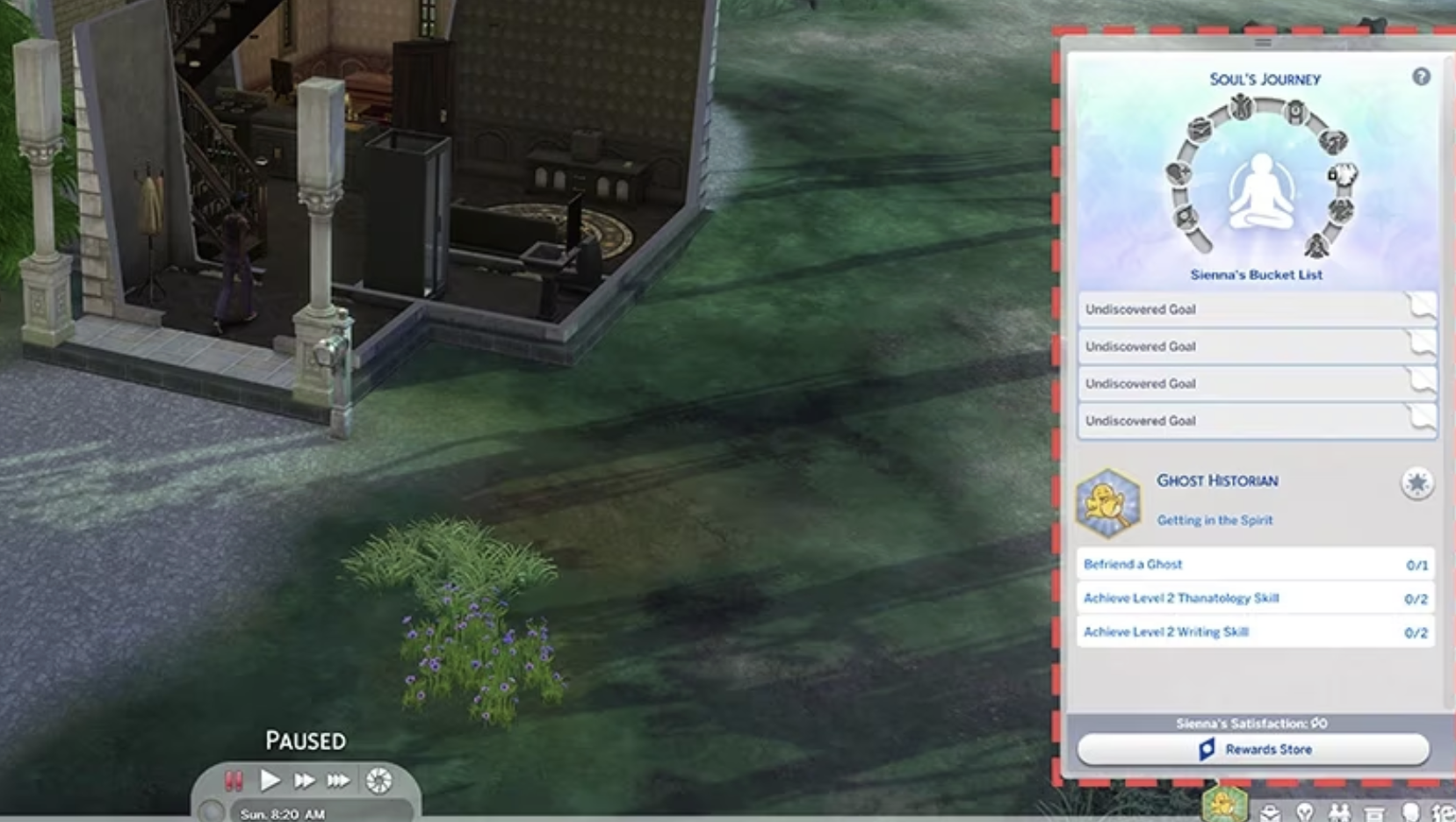
Bucket Lists
Once a Sim reaches young adulthood, they can create a Bucket List. These goals may be player-chosen or generated based on traits and lifestyle, rewarding Sims emotionally while contributing to Soul’s Journey progress.
Unfinished Business
When a Sim dies and becomes a ghost, their Soul’s Journey does not reset. Instead, their remaining Bucket List goals transform into Unfinished Business. This system reframes ghost gameplay as a continuation of the Sim’s story rather than a novelty state.
Unfinished Business gives ghosts clear purpose. Goals may involve repairing broken relationships, completing life dreams that were never fulfilled, resolving conflicts, or uncovering hidden truths tied to Ravenwood and the afterlife. These tasks encourage players to keep ghosts active in the world instead of immediately releasing them to the Netherworld.
As ghosts complete Unfinished Business, they continue progressing through Soul’s Journey, unlocking stronger ghost abilities, deeper interactions, and access to long-term rewards. This makes ghost gameplay feel structured, narrative-driven, and rewarding instead of chaotic or short-lived.
Rebirth
Rebirth is the final and most powerful outcome of Soul’s Journey. Sims who make significant progress through both their living goals and Unfinished Business can unlock the ability to be reborn. Rather than simply ending their story, rebirth allows a Sim to begin life again with lingering bonuses tied to their previous existence.
Reborn Sims may carry over special traits, emotional advantages, or progression boosts that reflect the life they lived before. This feature is especially impactful in legacy and rotational saves, where a single Sim’s soul can influence multiple generations.
Rebirth transforms death into a storytelling loop instead of a conclusion. It allows players to explore themes of growth, redemption, and continuation while still respecting the weight of a Sim’s original life choices.
Wills, Heirlooms, and Legacy Planning
Life & Death introduces a detailed Will system that allows Sims to plan what happens after they pass away. Players can distribute Simoleons, assign heirloom objects, choose remains preferences, and plan for dependents, adding emotional weight and realism to generational gameplay.
Funerals and Grief
Life & Death completely reworks how Sims experience loss, making death feel like an emotional event rather than a temporary inconvenience. Funerals and grief are no longer surface-level features. They are layered systems that influence relationships, moods, and long-term storytelling in meaningful ways.
Funerals
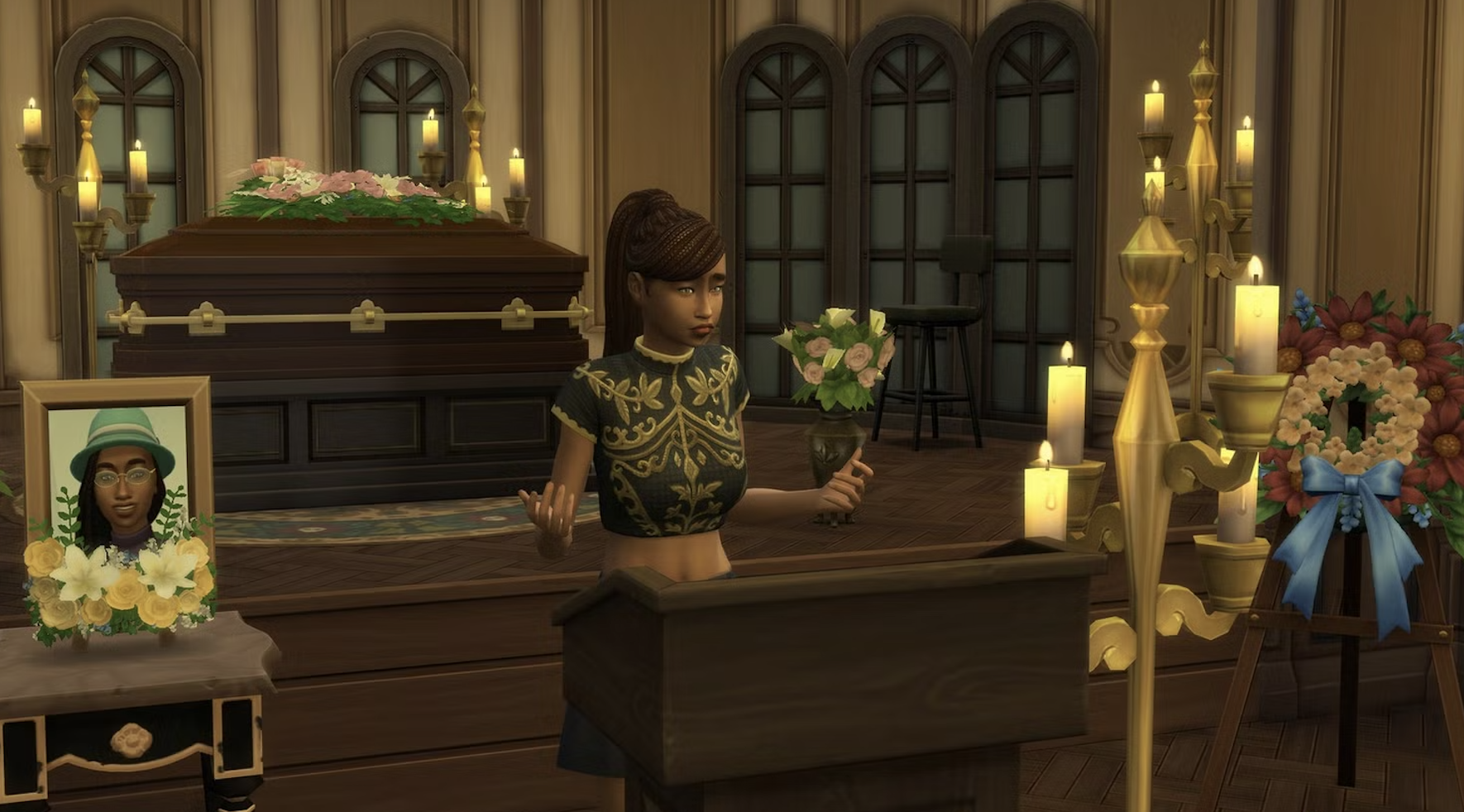
Funerals are now fully customizable social events that allow Sims to gather and honor a deceased Sim. When planning a funeral, players can choose the tone of the event, select activities, and decide how Sims remember the person who passed. These events can be somber and reflective or more celebratory, depending on the relationships and personality of both the deceased and the attending Sims.
During funerals, Sims may share memories, mourn openly, comfort others, or struggle emotionally. How Sims behave at a funeral can strengthen bonds, cause tension, or create lasting emotional impressions. Poorly handled funerals can leave attendees feeling unresolved, while meaningful services can provide emotional closure and positive relationship changes.
Funerals also tie directly into the Will system. Sims who planned ahead can have their preferences respected, making these events feel intentional and personal rather than generic.
Grief Styles
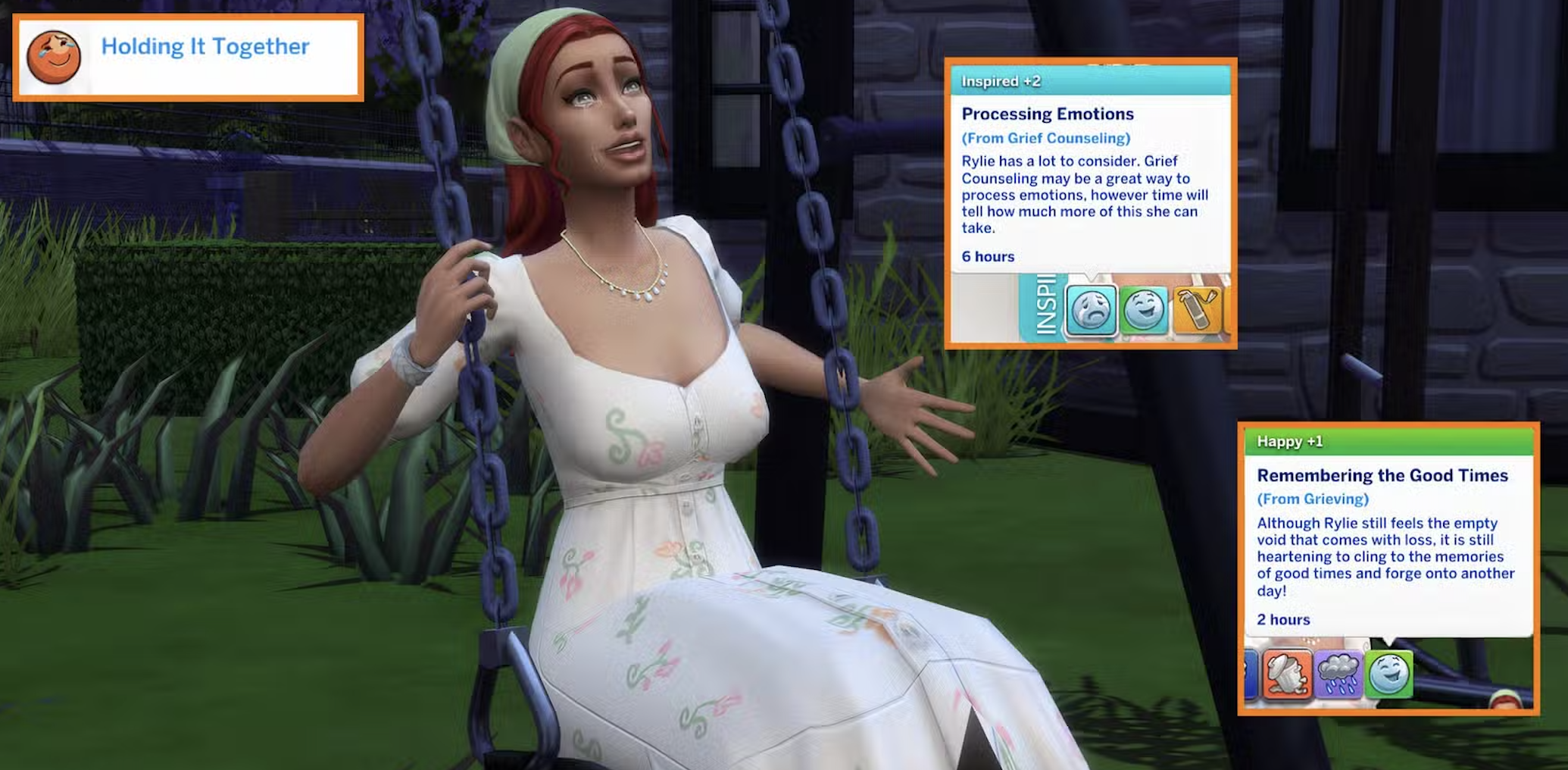
Grief in Life & Death is no longer limited to a single moodlet that fades quickly. Sims experience grief through different grief styles, which affect how they behave over time after a loss. These styles influence emotions, autonomy, and social interactions rather than locking Sims into constant sadness.
Some Sims may struggle privately and attempt to hold themselves together, while others may express anger, denial, or deep emotional lows. These reactions can surface days or even weeks after a death, creating more realistic emotional arcs instead of immediate recovery.
Grief can also impact daily life. Sims may lose focus at work, withdraw socially, or seek comfort through hobbies, relationships, or routines. Supportive interactions from friends and family can help Sims process grief more effectively, while neglect can prolong emotional distress.
Long-Term Impact
What makes funerals and grief stand out in Life & Death is their lasting influence. The way a Sim processes loss can shape their personality, relationships, and future decisions. Grief can quietly influence storytelling by pushing Sims toward new aspirations, deeper bonds, or even an interest in the afterlife itself.
For legacy and storytelling players, this system adds emotional continuity. Death no longer resets the household’s emotional state. Instead, it becomes a defining moment that echoes through future gameplay, making every loss feel meaningful rather than disposable.
Careers Included in Life & Death
Life & Death introduces two careers that match the pack’s theme in very different ways:
Reaper is an active career, meaning you can follow your Sim to work and complete a scored checklist during the shift.
Undertaker is a traditional career (rabbit hole), with two branches that specialize in either the ceremonial side or the behind-the-scenes side of death care.
If you like hands-on gameplay, Reaper will be your main obsession. If you prefer steady promotions and legacy-friendly realism, Undertaker is the better fit.
Reaper Career (Active Career)
The Reaper career is built around the idea of becoming Grim’s apprentice, working your way up through the Netherworld’s system rather than instantly becoming “the Grim Reaper.” It is a scored career event, so your performance depends on completing specific tasks during each active shift.
What Active Career Means
When it’s time for work, you can choose to follow your Sim. If you do, you’ll get a Scored Career Event with a checklist of tasks and a performance rating. You can track these tasks through the scored event panel (briefcase icon) and the event tracker during the workday.
That “score” matters because:
Completing workday tasks improves career performance faster
Promotions are tied to finishing the required career tasks for your current rank
What you actually do on the job
While the exact tasks vary by rank, the Reaper career is structured around the pack’s afterlife themes: training to reap, dealing with death-related situations, and building competence through increasingly complex workday objectives. It’s described as a ten-level active career where responsibilities ramp up as you progress.
Promotion requirements and tracking
Promotion tasks change by rank, and you should check them in the Scored Career Event Panel and career UI. One of the common requirements is simply attending an active workday, meaning skipping the follow option can slow progress depending on your task list.
Why players love it
The Reaper career is popular because it creates:
A structured “story mode” for occult or lore-heavy saves
A reason to keep ghosts, funerals, and Soul’s Journey progression relevant
A work routine that feels different from standard careers (because you are actively completing objectives, not waiting for the shift to end).
Undertaker Career (Traditional Career with Branches)
The Undertaker career is a more grounded, legacy-friendly path focused on death care, funeral work, and cemetery responsibilities. It comes with Life & Death and has two branches: Mortician and Funeral Director.
How to join
You can join like most careers:
Use the phone or computer → Find a Job → select Undertaker
Promotions and career tasks
Promotions require completing career tasks, which change as your Sim rises in rank. EA specifically points players to the Career Panel (briefcase icon) to view current requirements.
Certification (important for this career)
A standout feature is that Undertaker includes a Certification process. you can earn it from the computer by selecting Earn Certification. This gives the career a “professional ladder” vibe, which fits the realism tone of the pack.
The Thanatology study is part of the role. Sims can read theories from the computer using More Choices → Read Theories on… which supports progression depending on the tasks your rank requires.
When the career splits (Mortician vs Funeral Director)
As your Sim advances, Undertaker splits into two paths (Mortician or Funeral Director). The branch choice happens mid-career and changes the flavor of your progression.
Mortician branch
This path leans more “behind-the-scenes,” focusing on preparation work, technical responsibilities, and research-style progression that pairs well with Thanatology.
Funeral Director branch
This path is more people-facing and ceremony-focused. It fits Sims with stronger social skills and storytelling centered on community, grief, and memorial events.
Why Undertaker is great for legacy saves
Undertaker is the career that quietly supports long-term storytelling:
It ties naturally into funerals, wills, and generational gameplay.
It works well for Sims who live in Ravenwood or run a “family cemetery” style storyline.
It gives your save a realistic way to engage with the pack even if you do not want full occult chaos.
Expanded Ghost Gameplay
In Life & Death, ghosts are no longer just a “fun household cameo.” They become a fully supported life state with progression, goals, and a real gameplay loop that can carry a save for multiple generations. EA specifically highlights that you can customize playable ghosts in Create-a-Sim, build ghost powers, and earn special essences tied to how your ghost behaves.
Playable Ghost vs Free-Roaming Ghost
After a Sim dies, your ghost can exist in different ways depending on how you manage them:
Playable Ghosts can remain in your household so you control them like any other Sim. This is the option for players who want to keep a legacy founder around, finish goals, or turn “death” into a second act of the story.
Free-roaming Ghosts exist in the world and can show up like NPCs. Ghosts can also move on over time if they are not anchored or kept around, which helps explain why some saves slowly “lose” older ghosts unless you actively keep them involved.
Ghost Mastery
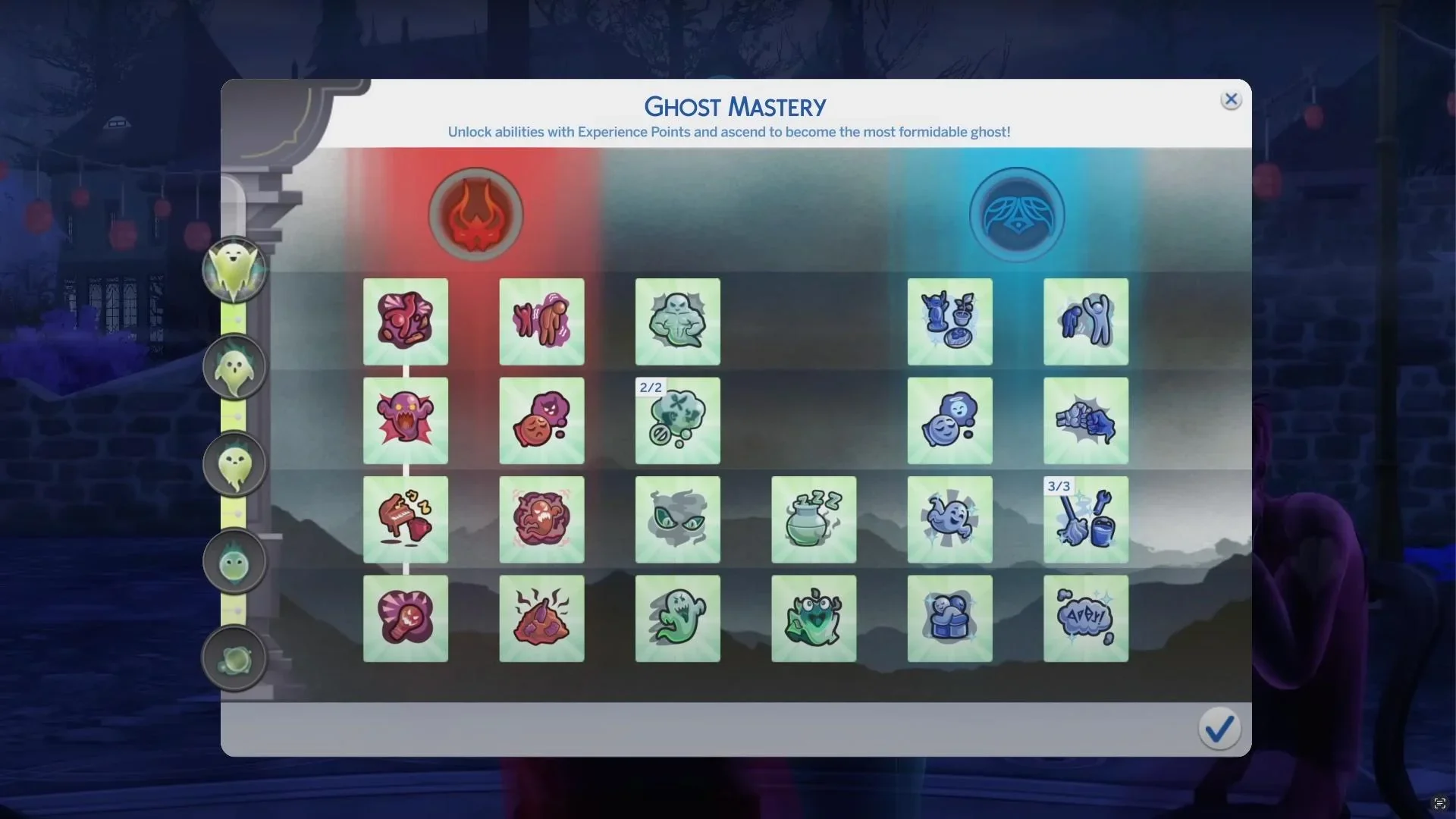
Life & Death adds Ghost Mastery, which functions like a perk system for ghosts. Instead of ghosts having a small set of fixed interactions, your ghost earns progression and unlocks abilities over time. As you invest into Ghost Mastery, you expand what your ghost can do in the world, how efficient they are at using powers, and how long they can stay active before needing to recover.
Stamina
Ghost powers are not unlimited. They rely on Stamina, which is essentially the resource that fuels your ghost’s abilities. Upgrading Ghost Mastery can improve how long a ghost can stay active and how often they can use stronger powers before they need to rest or recover.
Fear Essence and Goodwill Essence
One of the coolest parts of the system is that ghosts can earn Fear Essence or Goodwill Essence depending on how they use their powers and how they treat living Sims. These essences are not just flavor. They create a real gameplay loop because you can collect them and sell them for Simoleons, turning the afterlife into a legitimate way to support a household.
If you want your ghost to feel more “good” or more “chaotic,” Ghost Mastery supports that kind of roleplay because different actions and abilities lean into different vibes, and the essence system makes those choices feel rewarding.
New Traits, Aspiration, and Skill
Life & Death adds personality and progression systems that feed directly into Ravenwood storytelling, death careers, and ghost gameplay. The pack’s three traits, one aspiration, and Thanatology skill work together, so it feels less like separate features and more like one connected theme.
Traits: Macabre, Skeptic, and Chased by Death
Macabre
Macabre Sims are drawn to death-themed topics and tend to react differently to dark or spooky situations than other Sims. Instead of only getting negative reactions, they can feel more comfortable around afterlife content and may get social interactions that fit a gloomier tone. It’s a great trait for Ravenwood residents, Undertakers, Reapers, and Sims you want to build into ghost-focused storylines.
Skeptic
Skeptic (Skeptical) Sims are the opposite vibe. They resist supernatural explanations and tend to approach ghostly activity with doubt rather than fascination. This trait is perfect for storytelling where a Sim slowly gets convinced over time, or where they clash with occult-heavy family members. Some community documentation also notes Macabre and Skeptical are not compatible, so you generally build a Sim one way or the other.
Chased by Death
Chased by Death is the “danger” trait. Sims with this trait are more likely to have close calls or heightened risk when doing things that could lead to death. Some guides describe it as making deadly outcomes more likely in situations where other Sims might survive. It’s ideal for chaos saves, dramatic legacies, and storytelling where a Sim feels like the universe is literally after them.
Ghost Historian Aspiration
The Ghost Historian aspiration is for players who want a structured path through the pack’s lore and systems. It pushes your Sim toward investigating the afterlife and building the skills that support that lifestyle. Multiple guides confirm that Thanatology is a major requirement for this aspiration, and some steps also involve building Writing as you progress through higher tiers.
This aspiration is especially good for:
Ravenwood saves where you want your Sim to feel tied to local mysteries
Long legacy play where one Sim becomes the family’s “keeper of the dead”
Players who want goals that naturally lead into ghost gameplay
Thanatology
Thanatology is the pack’s dedicated skill for studying death, the afterlife, and ghost-related knowledge. It supports the Ghost Historian aspiration and also helps with performance in Life & Death careers like Reaper and Undertaker.
How you build Thanatology
Thanatology is designed to feel like research and study. A common method is using the computer option to Read Theories (wording varies by menu, but the “Read Theories on…” interaction is frequently referenced in detailed guides).
What Thanatology gives you
As you level it, Thanatology unlocks more confident and effective death-related interactions, supports your Sim’s ability to engage with ghosts and afterlife content, and helps with progression requirements tied to careers and the Ghost Historian aspiration.
Life & Death Build/Buy
Life & Death’s Build/Buy catalog is built to support three main vibes: Ravenwood gothic, antique “old money” comfort, and funeral and memorial realism. You can absolutely use the pieces outside of Ravenwood because most of the set reads as classic vintage rather than “costume spooky.”
How big is the catalog?
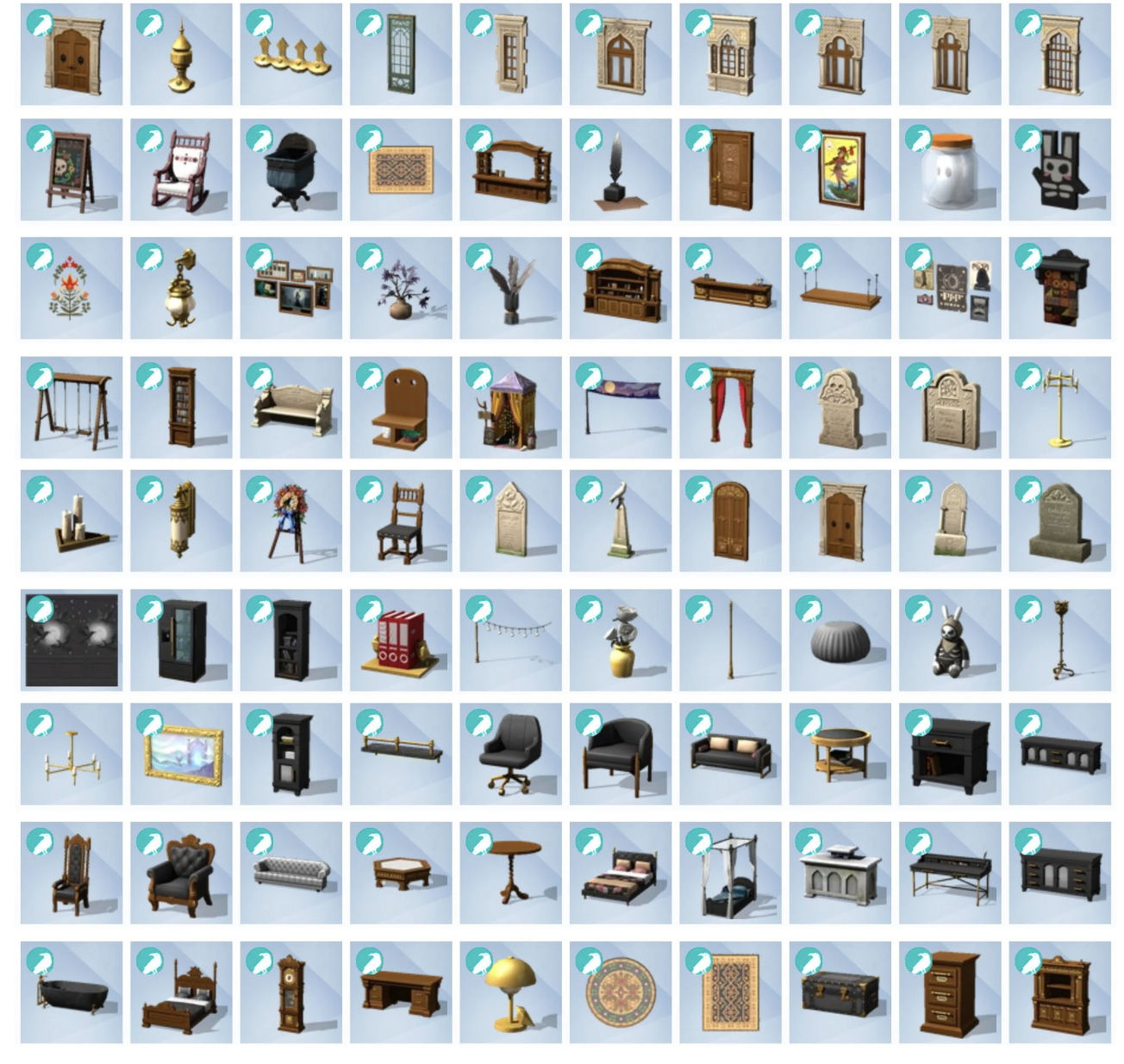
Catalog previews and item breakdowns estimate 180+ Build Mode objects (not counting hidden/locked gameplay objects that may not appear in previews). There are also detailed object-list guides that organize the pack’s items by the same categories you see in Buy Mode (Comfort, Surfaces, Lighting, Decorations, etc.), which shows just how broad the furniture set is.
1) Gothic structure pieces that still work in “normal” builds
This pack leans heavily into arched windows, darker trims, and old-world detailing, which makes it perfect for Victorian, gothic revival, or even just “slightly moody” family homes. A lot of the architectural pieces are neutral enough that you can use them for:
townhouses
old libraries
classic apartments
historic family estates
…and not feel like you built a haunted house on accident.
2) Funeral, memorial, and ceremony décor
Life & Death adds items that are clearly designed to support funerals and remembrance gameplay: ceremonial décor, memorial-style objects, and event-friendly clutter that makes a service look intentional instead of improvised. This is the part of the catalog you usually cannot “fake” with other packs, and it’s a big reason the DLC feels different from standard gothic décor sets.
3) Lighting that sets the whole mood (and it’s functional)
The lighting catalog is a standout because it isn’t only dramatic. Several lights are designed to be practical for everyday builds while still matching the theme. For example, object-list guides for the pack’s lighting show items like Tessellated Candles and the Mourningvale Lantern, and they include special tags such as Off-the-Grid functionality and Heirloom Eligible on certain pieces.
That means the lighting is useful for:
off-the-grid cabins
haunted mansions
cozy candlelit kitchens
legacy homes where you want key objects to feel “passed down”
4) Worn textures and antiques (why it feels “lived in”)
A lot of the furniture and décor leans into aged wood, slightly distressed finishes, ornate metalwork, and old-fashioned silhouettes. It’s the kind of styling that instantly makes rooms feel older and more story-rich, especially if you build in layers: a few antiques as anchors, then smaller clutter objects to make the space feel inherited instead of bought.
Best ways to use Life & Death Build/Buy outside Ravenwood
If you want the items to blend into non-spooky saves, these are the easiest approaches:
Use the architectural pieces (doors/windows/wall trims) for “historic charm” builds.
Use candles + lanterns to create cozy lighting without leaning into horror.
Add memorial objects subtly in legacy homes (one shelf, one framed area, one urn space) so it feels like family history, not a theme park.
So, Is The Sims 4 Life & Death Worth It?
If you love legacy saves, story-driven gameplay, and Sims that feel emotionally connected across generations, then yes — Life & Death is absolutely worth it. This expansion is less about instant chaos and more about depth that slowly reshapes how your save feels over time.
Life & Death shines for players who enjoy playing the long game. Bucket Lists give Sims a sense of purpose, wills and heirlooms make deaths feel intentional, and Soul’s Journey ensures that a Sim’s story does not end when they do. Instead of deleting households or rushing through generations, this pack encourages you to sit with moments, remember past Sims, and let their choices echo forward.
For storytellers, this pack is a dream. Funerals, grief styles, and expanded ghost gameplay add emotional texture that makes families feel real rather than disposable. Ghosts are no longer just spooky visitors. They have goals, progression, and even ways to support a household, which makes keeping them around feel meaningful instead of messy.
Occult fans will appreciate that the supernatural elements are layered, not overwhelming. You can go full gothic and live in Ravenwood surrounded by ghosts and rituals, or you can quietly weave Life & Death systems into a very normal suburban save. Either way, the pack adapts to how you play rather than forcing a single style.
That said, Life & Death may not be for everyone. If you prefer fast-paced gameplay, constant action, or packs that immediately flood your save with new mechanics, this one might feel subtle at first. Its strength comes from accumulation, not instant payoff.
Overall, Life & Death is one of those expansions that grows with you. The longer you play, the more you notice how much it adds. If your Sims saves thrive on memory, meaning, and a little bit of cozy darkness, this pack earns its place in your collection.