The Sims 4 Marketplace Explained: What the Maker Program Means for Players
If you thought The Sims 4 had already drained every last Simoleon from our real-life wallets, EA apparently looked at that and said, “Let’s get creative.” Enter The Sims 4 Marketplace, EA’s new in-game shop that is already causing plenty of debate among Simmers.
On paper, it sounds pretty convenient. The Marketplace gives players an official place to buy content directly in the game, including creator-made items. It promises easier downloads, safer installs, and more support for approved creators. That is the polished version.
The less polished version? A lot of players are wondering whether The Sims 4 Marketplace is actually a helpful new feature or just another shiny way for EA to charge people more money in a game that already has enough paid content to make your bank account flinch.
What Is The Sims 4 Marketplace?
The Sims 4 Marketplace is an in-game store where players can browse and buy different types of content. According to EA, that includes Maker Packs, Kits, Expansion Packs, Game Packs, and Stuff Packs.
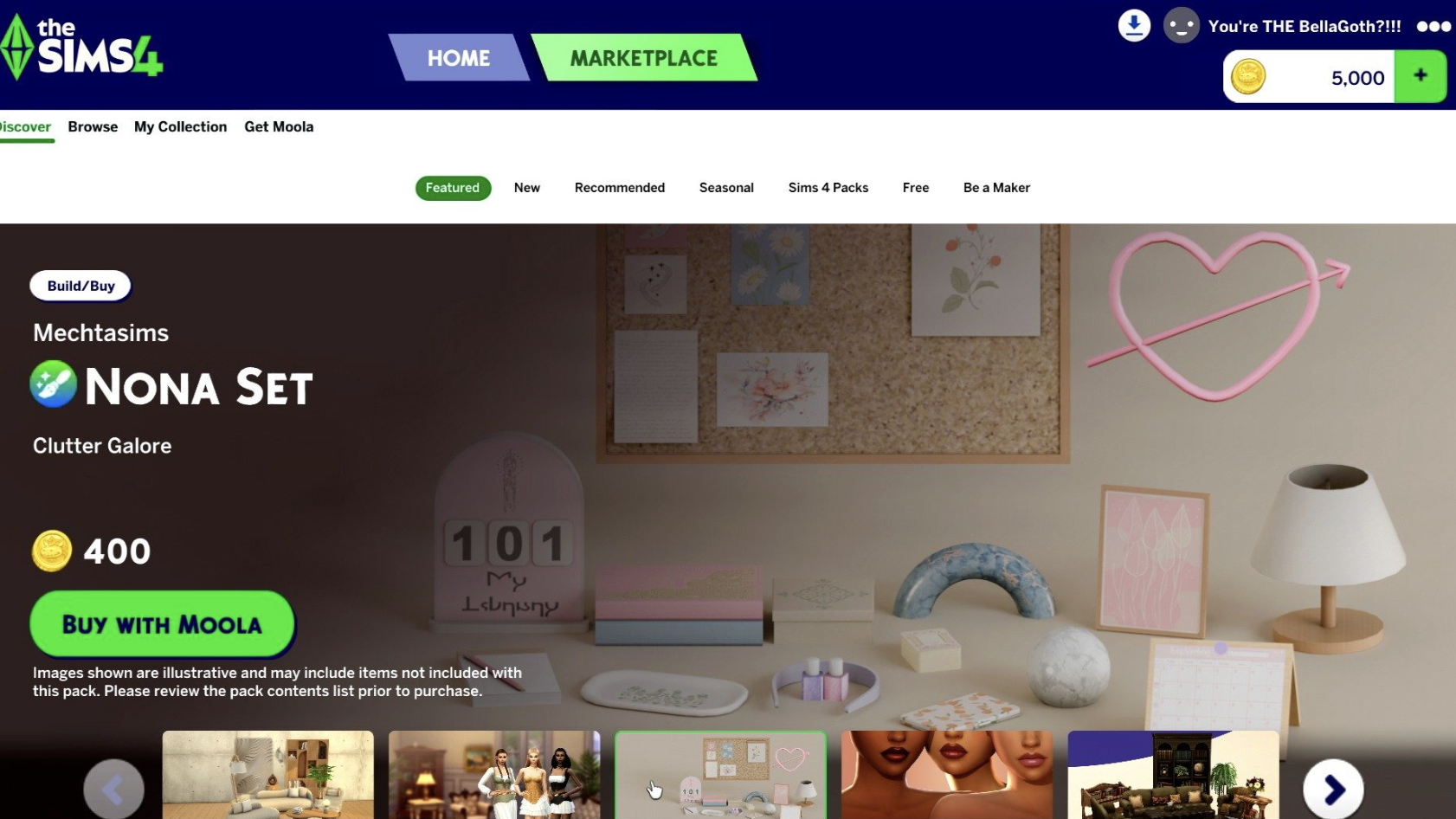
The biggest new feature is Maker Packs, which are creator-made packs sold through EA’s official system. Another big change is how purchases work. Maker Packs and Kits use a virtual currency called Moola, while Expansion Packs, Game Packs, and Stuff Packs still use regular real-world money.
EA also says the Marketplace is meant to make downloads faster and easier. Some content can be downloaded on demand without restarting the game, which is great news for anyone who is tired of turning a simple shopping decision into a full desktop event.
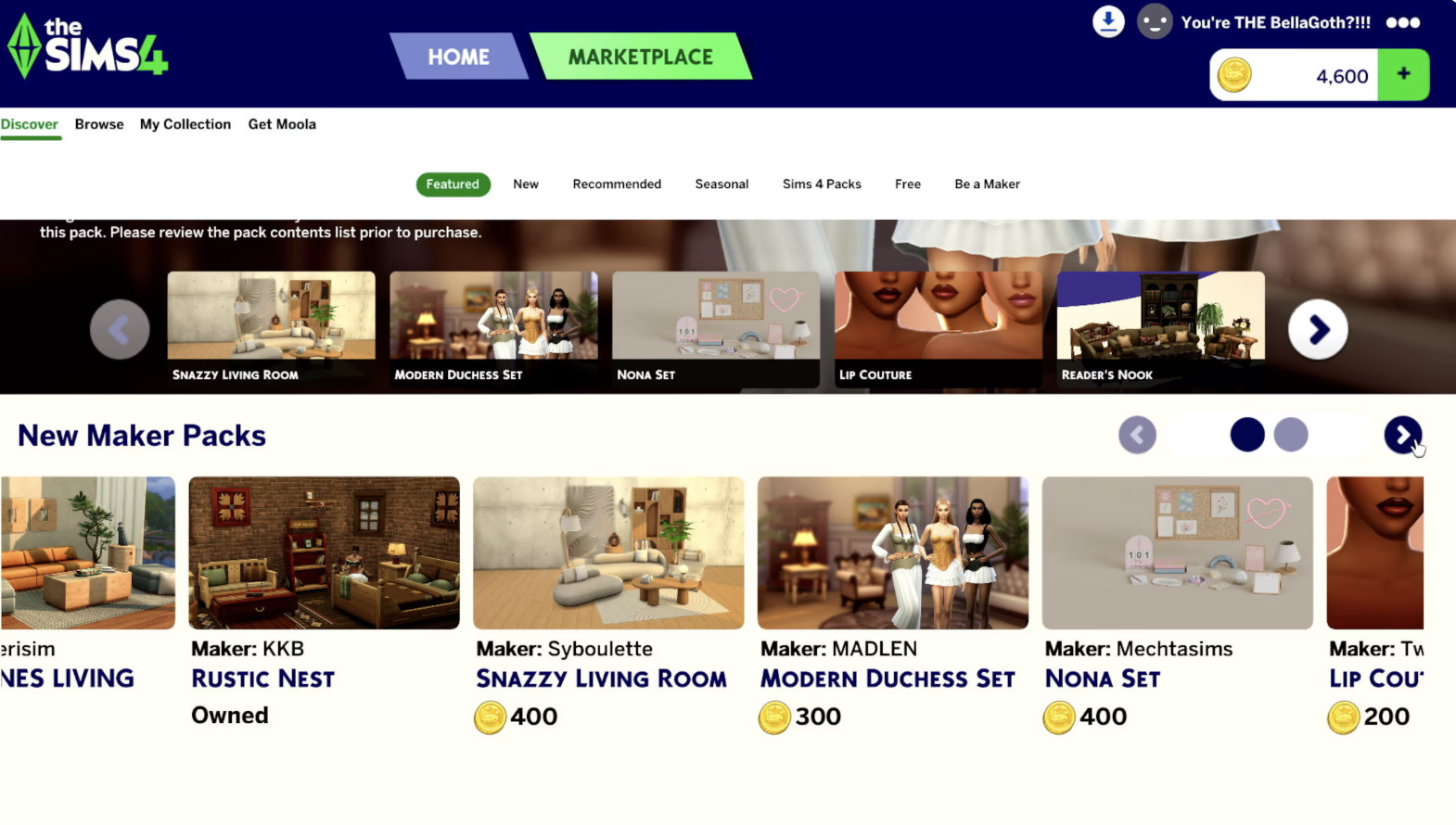
So yes, the official pitch is convenience, safety, and smoother access. Because apparently even The Sims 4 has entered its “currency system inside a life sim” era.
What Is the Sims 4 Maker Program?
One of the biggest reasons The Sims 4 Marketplace is getting attention is the new Maker Program.
This program allows approved creators to sell content through the Marketplace. EA says Maker Packs are made by selected community creators and reviewed for safety, compatibility, and rating compliance before they are sold. In other words, this is not random CC floating around the internet. It is official, curated, and approved by EA.

To qualify, creators have to meet certain requirements, including being at least 18 years old, having an EA account in good standing, and passing a technical evaluation. Reports on the program also say creators receive around 30% of sales from their Maker Packs.
That sounds good in theory. Creators get paid, players get easier access, and EA gets to present itself as the helpful middleman. Naturally, that last part is exactly why some people are skeptical.
Why Players Are Side-Eyeing the Sims 4 Marketplace
The concern many players have is simple: EA is now monetizing the same creator culture that helped keep The Sims 4 alive for years.
For a long time, custom content has been a huge part of the Sims experience. CC creators have added more personality, better fashion, better furniture, and frankly better taste to the game than official content sometimes manages to do. That community has largely existed outside of EA’s official store system.
That is why the Marketplace feels different.
EA’s regular mods policy still says that mods must eventually be distributed for free, though creators can use limited early access and accept passive donations. But Marketplace content is not operating under that same casual community model. It is official. It is curated. It is sold in-game. And it is tied to EA’s own currency system.
So for many players, the issue is not just “paid creator content exists.” The issue is that EA has stepped into a community-driven space and installed a checkout counter.
Is The Sims 4 Marketplace a Cash Grab?
A lot of players think so (including me), and honestly, it is not hard to understand why.
The Sims 4 already has a massive DLC ecosystem. Expansion Packs, Game Packs, Stuff Packs, and Kits have already made the game one of the most expensive “optional purchase” experiences in existence. Adding The Sims 4 Marketplace on top of that makes some players feel like EA saw an already crowded store shelf and said, “You know what this needs? More receipts.”
The biggest criticism is that the Marketplace creates another layer of monetization. Instead of just selling official EA content, the company is now also creating a structured system for selling approved creator content inside the game. Yes, creators may benefit from that visibility and official support. But EA still controls the platform, the terms, and the purchasing system.
That is where the frustration comes from. Supporting creators sounds great. But when it happens inside yet another EA-controlled storefront, many players feel like the company is less interested in community support and more interested in finding fresh ways to keep milking the same cow until it files a workplace complaint.
Pros of The Sims 4 Marketplace
To be fair, there are some real benefits to The Sims 4 Marketplace.
1) Safer downloads
One of the biggest advantages is safety. EA says Marketplace content is reviewed and safe to download. That matters because downloading random custom content from the internet can sometimes feel like a gamble between a cute sofa set and total game corruption.
2) Easier installation
Marketplace content is built into the game, so downloading it is much easier than hunting down files, organizing folders, and hoping you did not just install six broken eyelashes and a haunted toaster.
3) Better access for console players
This is a major one. Traditional CC has mostly been a PC thing, so the Marketplace could give console players an official way to access creator-made content for the first time.
4) More official opportunities for creators
For some creators, this system may offer a more structured and stable way to earn money compared to relying only on Patreon, ad links, or outside websites.
Cons of The Sims 4 Marketplace
Now for the louder half of the conversation.
1) More monetization in an already expensive game
This is the biggest complaint. The Sims 4 Marketplace adds even more paid content to a game that already has plenty of it.
2) Kits are moving further into EA’s system
EA says that on PC, Kits will be purchased through the Marketplace using Moola. That shift makes the whole system feel more controlled and more locked into EA’s ecosystem.
3) Some purchases are non-refundable
Marketplace purchases of Kits and Maker Packs are listed as non-refundable, which is never exactly comforting when you are spending real money on digital content.
4) EA gets a cut of creator-made content
This is the part many players cannot get past. The company is now profiting from content created by the same kind of community that has been adding life to the game for years.
5) It changes the vibe of CC
What used to feel like a creative community space now has a more commercial feel to it. For some players, that shift is uncomfortable no matter how polished the system looks.
What the Sims 4 Marketplace Really Means
At the heart of all of this is one major issue: trust.
If EA wants players to believe the Marketplace is about helping creators, players first have to believe that EA is not just using creator content as its newest revenue stream. That is a hard sell when the company already has a reputation for stretching The Sims 4 monetization farther than most players ever expected.
That does not mean the Marketplace is completely bad. It has real benefits. Safer downloads, easier access, and more opportunities for creators are all good things.
But it also does not mean players are wrong to be suspicious.
Because from the outside, the Marketplace can look less like “we are empowering creators” and more like “we found a way to put a cash register next to the custom content community.”
And that is why so many Simmers are conflicted. The idea itself is not all bad. It is just wearing an EA name tag, which makes everyone instinctively check where their wallet is.
The Sims 4 Marketplace Pros and Cons at a Glance
Pros
Safer, reviewed creator-made content
Easier installation and in-game access
More opportunities for approved creators to get paid
Potential access to creator content for console players
Convenient built-in shopping experience
Cons
Adds more monetization to an already expensive game
Uses virtual currency for Kits and Maker Packs
Some Marketplace purchases are non-refundable
EA takes a cut from creator-made content
Makes the custom content space feel more commercialized
Wrap-Up
The Sims 4 Marketplace is not completely bad, and it is not completely good either. It is a mix of convenience, creator opportunity, and very obvious monetization.
On one hand, it could make creator-made content safer, easier to install, and more accessible to more players. On the other hand, it adds another paid layer to a game that already has a long history of asking players to open their wallets for nearly everything short of breathing.
As for the rumor that EA is done making Expansion Packs, Game Packs, and Stuff Packs? That is not officially confirmed. EA says those pack types are still part of the Marketplace, even as Kits and Maker Packs become a bigger focus.
So at this point, the most honest conclusion is this: The Sims 4 Marketplace could be useful, but it also feels like another EA money move, and that is exactly why so many players are watching it with cautious, exhausted suspicion.
Because in true Sims fashion, even buying a digital bookshelf now comes with emotional baggage.