Tiny Bookshop Beginner’s Guide: How to Run Your Cozy Bookstore Successfully
Tiny Bookshop is a cozy game about slowing down and finding joy in small decisions. Each day, you roll your little bookstore into a new corner of Bookstonbury-by-the-Sea, open your doors, and help customers find the perfect book. With its relaxed pace, thoughtful interactions, and charming seaside settings, it’s easy to settle in and play at your own rhythm.
Success in Tiny Bookshop comes from understanding a few core systems: how stocking works, why location matters, how customer preferences shape sales, and how décor and events can boost your shop’s performance. Grasping these early makes the game feel even more rewarding and lets you build a bookstore that’s both cozy and profitable.
This beginner’s guide breaks down the essentials with practical tips so you can start running your bookstore confidently and enjoy the unhurried charm the game offers.
1. Start with Smart Stocking
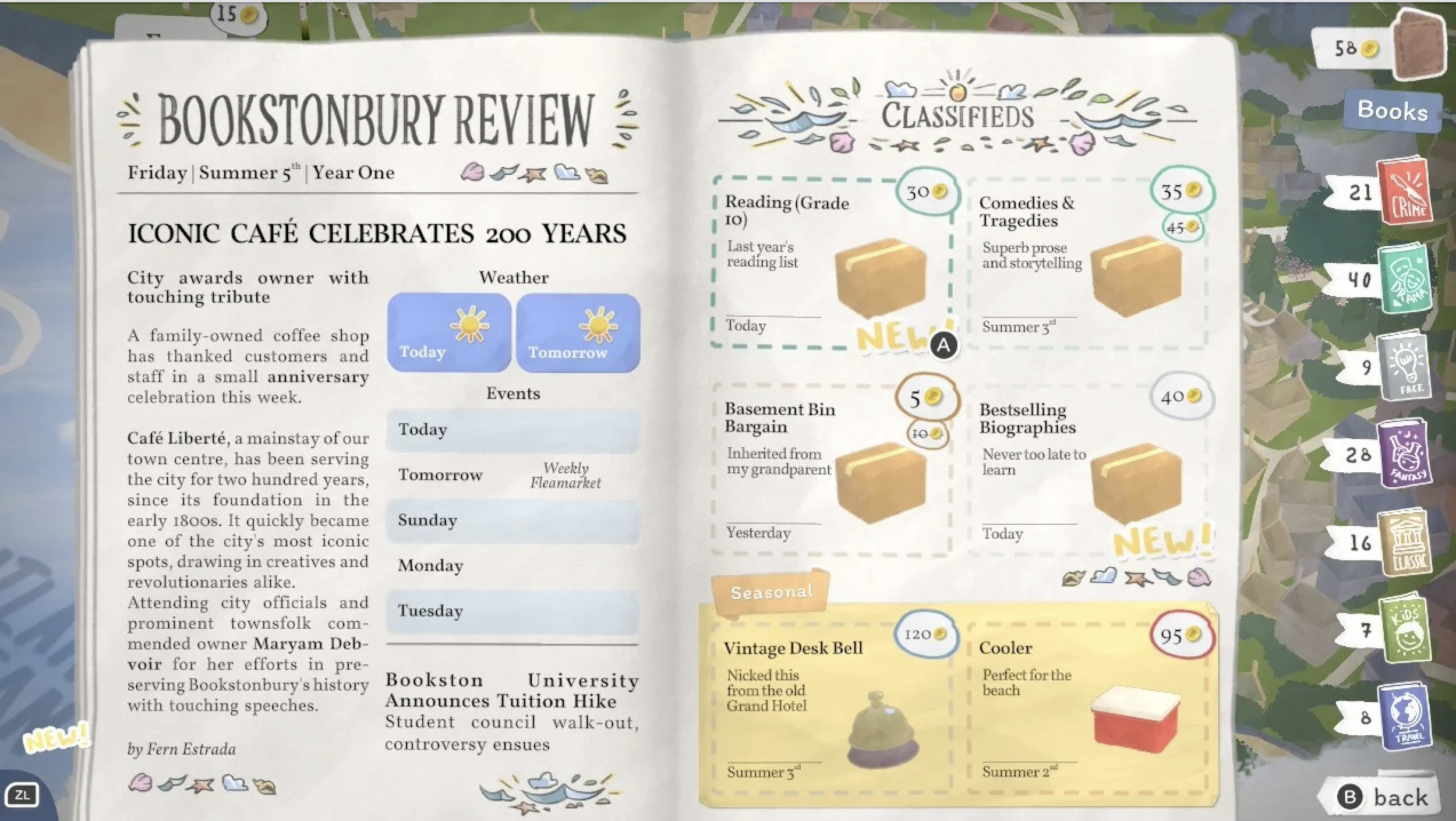
Use the Bookstonbury Review
Before anything else each day, open the Bookstonbury Review newspaper. It shows:
Daily weather and forecasts.
Upcoming events (like markets and festivals).
Classifieds where you can buy new books or décor at discounted prices.
Seasonal items that might offer special bonuses.
Match Inventory to Location
Every selling location attracts a different crowd. Waterfront spots tend to favor crime, fact, fantasy, classic, and travel genres, while other places like beaches might have more kids and light fiction readers. Use the journal’s location info once you’ve visited spots, it’s your key to learning what sells where and getting consistent profits.
Stock High-Sale-Chance Books
When buying stock, check the “sale chance” percentage shown in the Bookstonbury Review. Higher sale chance means a better likelihood customers will buy that book at your chosen location. Prioritize those to keep shelves moving and profits steady.
2. Space and Shelves: Expand Wisely
Use Limited Space Efficiently
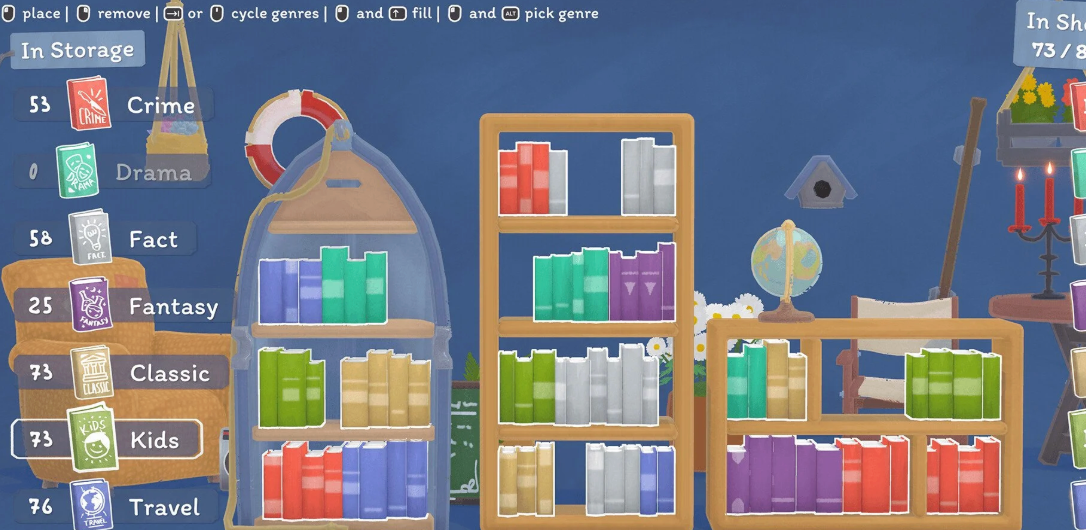
You start with a basic bookshelf. Each book you place increases the probability of selling that genre today, so make every shelf placement count. Tailor shelves to the crowd you expect, high-demand genres first, then niche ones that may trigger recommendations.
Get More Shelf Space
More shelves mean more books and better genre coverage, a huge advantage. You can expand space by:
Visiting the Flea Market and buying storage items or furniture.
Purchasing seasonal shelf pieces in the classifieds.
Completing quests that unlock shop upgrades.
These extra slots allow you to stock more titles and improve your ability to satisfy varied customer requests.
3. Customer Requests and the Inspiration Buff
Read Requests Carefully
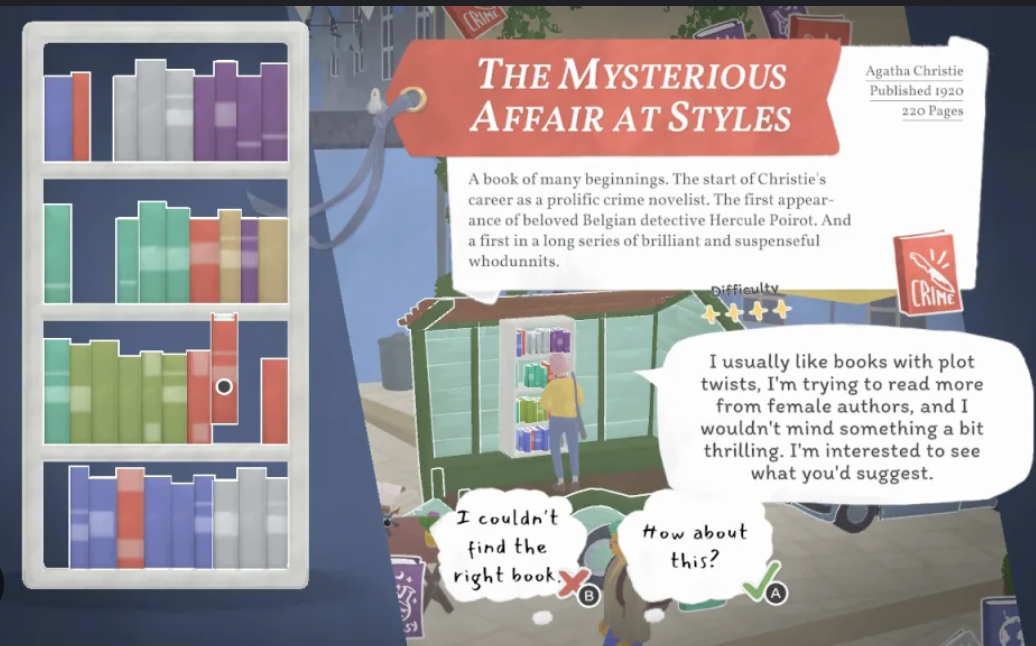
Customers sometimes ask for suggestions through dialogue prompts. These requests include genre clues such as topic, style, or even author type. Matching them well not only ensures a sale but also triggers an Inspiration buff, temporarily boosting overall sales chance across genres.
Buff Stacking Strategy
If you match multiple customer requests perfectly, you stack Inspiration buffs. Inspiration buffs can significantly increase your sell rates for the entire day. Keep genre diversity in mind so you can help various customers without empty shelves too fast.
4. Locations, Events, and Weather
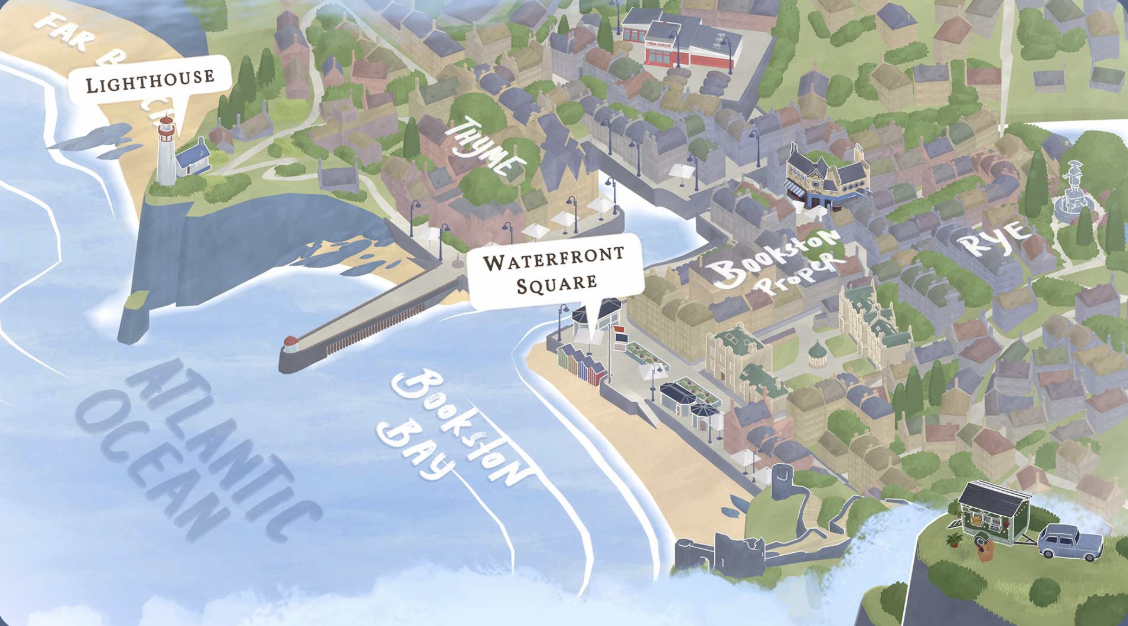
Choose the Right Location
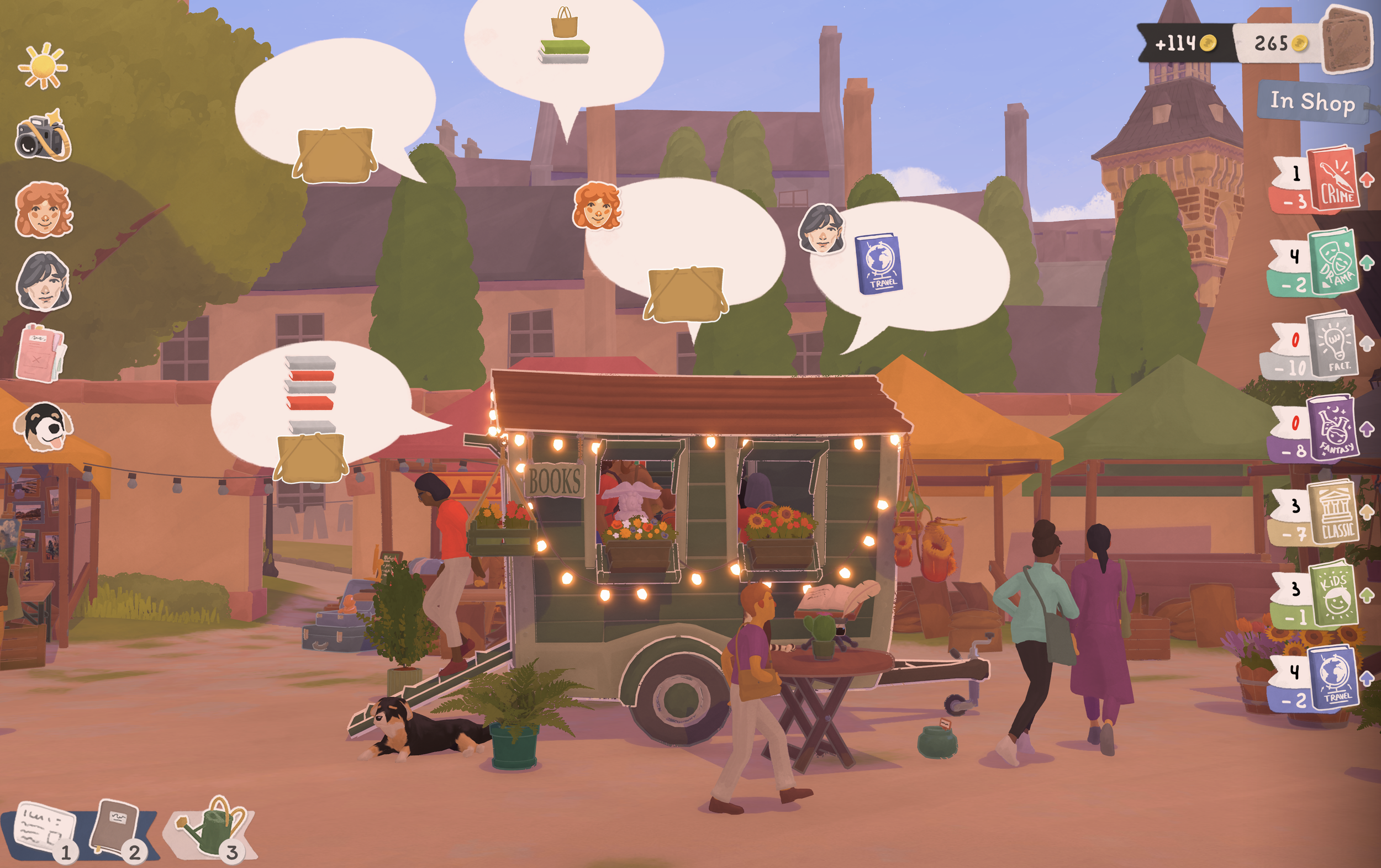
Locations aren’t just scenic. They change the type and number of customers visiting your shop. Some sell spots like the flea market bring big crowds and more sales opportunities, even with higher fees. Sometimes going into the negative temporarily is worth the payoff if your inventory fits the crowd’s tastes.
Watch the Weather and Calendar
While weather starts simply, later patterns can affect how customers browse and which passive bonuses, like rain increasing certain book effects, matter. The newspaper forecast lets you prepare ahead.
Take Advantage of Markets
Special events like the Flea Market draw larger crowds and opportunities for unique deals or freebies. These days are ideal for stocking high-demand genres and shifting out low sellers to maximize profits.
5. Decor and Passive Effects
Boost Sales with Decor
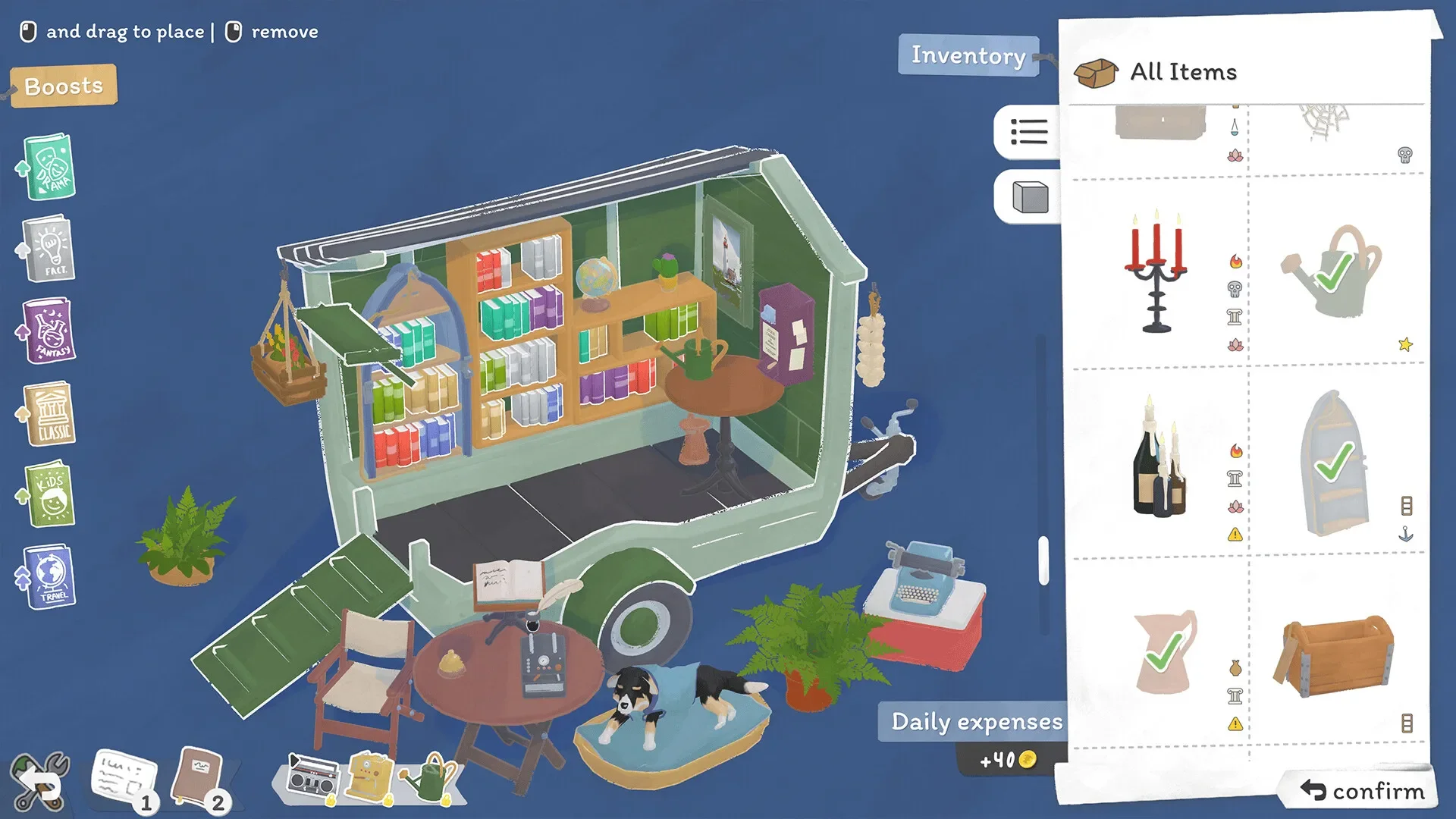
Decor isn’t just cosmetic, many items grant passive boosts. Some increase the chance of selling specific genres; others add to overall customer flow. For example, displaying certain thematic items can boost crime or classic book sales, but be mindful: some décor has tradeoffs that weaken other genres.
Decor Strategy Tips
Focus decor that synergizes with your stock for the day’s location.
Avoid items that penalize top-selling genres at a given spot.
Revisit decorative choices as your inventory changes or you unlock new items.
6. Money, Profit, and Growth
Grab Free or Cheap Books
Classified ads sometimes list free books. These are pure profit once sold. Cheap books also carry higher profit margins when matched with the right customer. Prioritize snapping up bargains to grow your capital early.
Manage Costs Carefully
Every location has parking fees, and décor items cost coins. High-traffic locations like flea markets can be worth the extra fee if you tailor stock correctly. Track your expenses to avoid overspending on low-return days.
7. Common Beginner Mistakes (and How to Avoid Them)
Ignoring the newspaper: Missing classifieds and events limits growth. Always check first.
Stocking inefficiently: Bringing too many unpopular genres clogs shelves and wastes space, match preferences to location.
Skipping recommendations: Helping customers isn’t just charming, it gives buffs that boost your sales across the board.
Neglecting decor effects: Some items give small but meaningful boosts; experiment to see what works best.
Quick Daily Checklist for Success
Open the Bookstonbury Review and check news, weather, and classifieds.
Choose your location based on customer preference data from your journal.
Buy books with high sale chance and relevant genres.
Stock your shelves strategically, genre balance first, niche genres second.
Decorate for bonuses that support your strongest genres.
Pay attention to customer requests and aim for Inspiration buffs.
Prepare for events like Flea Markets by overstocking high-demand books.
Wrap-Up
Tiny Bookshop is more than a shop management sim. It’s a gentle strategy game wrapped in cozy vibes. By learning how stock choices, location preferences, décor, and customer interactions work together, you’ll run your mobile bookstore more successfully and enjoyably. The more you play, the more satisfying it becomes to tailor your inventory and watch regulars return with smiles, wallets in hand.